Unique small business ideas for Modern Entrepreneurs

Small Business Ideas for Beginners: Start Your First Venture

Summary
Small businesses give beginners an opportunity to start with low investment, flexible working options, and great income potential. This guide explains the meaning of small business ideas, types, examples, steps to start, and tips to choose the right opportunity for long-term success.
What Are Small Business Ideas? — Introduction
When people search “What are Small Business Ideas”, they usually want simple, practical, and low-investment ways to start earning money. Small business ideas are business opportunities that can be started on a small scale, often with limited capital, minimal risk, and flexible operations.
You don’t always need a huge budget or a registered company to begin. Many successful entrepreneurs today started with small ideas — freelancing, online shops, homemade food, tutoring, or local services — and gradually grew their business step-by-step.
This guide is written in a conversational and beginner-friendly way, so you can clearly understand how to choose the right small business idea and turn it into a real-world opportunity.
Benefits of Starting a Small Business
Starting a small business offers several advantages — especially for beginners. Here are some key benefits:
Low Investment, High Potential
Most small businesses do not require huge startup capital. You can begin with basic tools or skills.
Flexible Working
You can work from home, part-time, or alongside a job or studies.
Independent Income
Instead of depending only on a salary, you create your own earning source.
Skill-Based Growth
Small businesses grow with experience, learning, and better strategy.
Opportunity to Scale
Many global brands began as small startups — your idea can grow too.
Types of Small Business Ideas
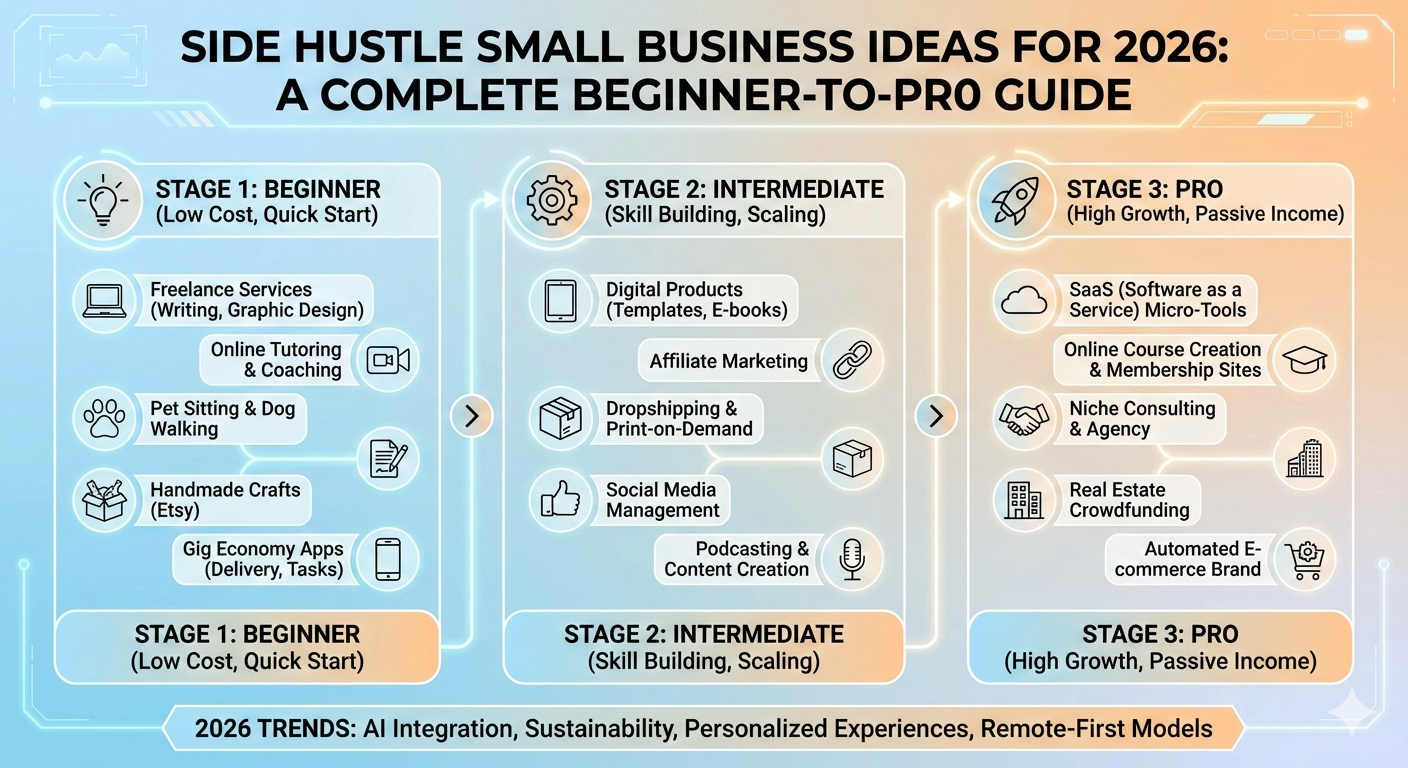
Small business ideas can be grouped into different categories. Understanding these types helps you choose the best one for your skills and budget.
Online Business Ideas
- Freelancing (writing, design, marketing)
- Dropshipping or e-commerce store
- Blogging or YouTube channel
- Affiliate marketing
- Online tutoring or coaching
Home-Based Business Ideas
- Homemade food delivery
- Baking, cakes, or snacks
- Tailoring or boutique
- Handmade crafts
- Beauty services from home
Service-Based Business Ideas
- Cleaning & maintenance services
- Digital marketing services
- Photography or videography
- Repair services (mobile, electronics)
- Fitness training or yoga instructor
Local & Retail Business Ideas
- Grocery or mini-mart
- Small café or food stall
- Stationery or gift shop
- Cosmetic or accessory store
- Mobile accessories shop
Most Popular Small Business Ideas for Beginners
Let’s explore some beginner-friendly business ideas that are practical and realistic.
Freelancing Services
If you have skills like writing, graphic design, social media management, or website development, freelancing is one of the best low-investment business ideas.
E-Commerce & Dropshipping
Sell products online through Shopify, Etsy, or local marketplaces. You don’t need to keep stock in some models — suppliers ship directly to customers.
Home-Kitchen Business
Many beginners successfully start home tiffin services, bakery items, snacks, or catering.
Tutoring & Online Teaching
Teaching academic subjects, languages, computer skills, or exam preparation is a high-demand business.
Beauty & Personal Care Services
Makeup, grooming, hairstyling, mehndi, and spa services work great from home or mobile setup.
Cleaning & Maintenance Services
Residential cleaning, car wash, appliance repair, and pest control are always in demand.
How to Choose the Right Small Business Idea
Choosing a business idea requires thoughtful decision-making. Ask yourself:
What skills do I already have?
Is there demand in my area or online?
How much investment do I need?
Can I manage time and workload?
Is the idea sustainable long-term?
A smart decision today saves you from failure tomorrow.
Steps to Start a Small Business
Follow these practical steps to convert your idea into action:
- Identify your skills and interests
- Research your market and competitors
- Estimate cost and budget
- Create a small business plan
- Choose business name and branding
- Register or legalize if required
- Promote through social media & networking
- Start small, improve continuously
Success grows with consistency, not overnight.
Common Mistakes Beginners Should Avoid
Many small businesses fail due to avoidable mistakes:
- Starting without market research
- Ignoring customer feedback
- Poor financial planning
- Trying to copy others blindly
- Giving up too early
Learn, adapt, and grow — that’s the real success formula.
Types of Small Business Ideas & Difficulty Level
| Business Type | Example Ideas | Investment Level | Difficulty | Suitable For |
|---|---|---|---|---|
| Online | Freelancing, E-commerce | Low to Medium | Easy | Students, Beginners |
| Home-Based | Baking, Crafts, Beauty | Low | Easy-Moderate | Women & Home Entrepreneurs |
| Service-Based | Cleaning, Repair, Fitness | Medium | Moderate | Skilled Workers |
| Local Retail | Grocery, Café, Gift Shop | Medium-High | Moderate-High | Full-Time Owners |
Conclusion
Small business ideas give beginners a chance to build independence, income, and confidence. Whether you start online, from home, or in your local market — the key is planning, patience, and continuous improvement. Choose a business that matches your skills, passion, and long-term goals — and start your journey today.
Frequently Asked Questions (FAQs)
1. What are small business ideas for beginners?
They are simple and low-investment business opportunities that anyone can start with basic skills and limited capital.
2. Do I need a lot of money to start a small business?
No — many small businesses can be started with minimum investment.
3. Which small business is best for students?
Freelancing, online tutoring, and e-commerce are great choices.
4. Can a small business grow into a big company?
Yes — many major brands started as small businesses.
5. What is the first step to start a small business?
Understand your skills, research your market, and create a simple plan.